September 24, 2026
Anthropic’s Claude AI discovers new CRISPR-like gene editing enzyme system.
By Sphit AI Newsroom
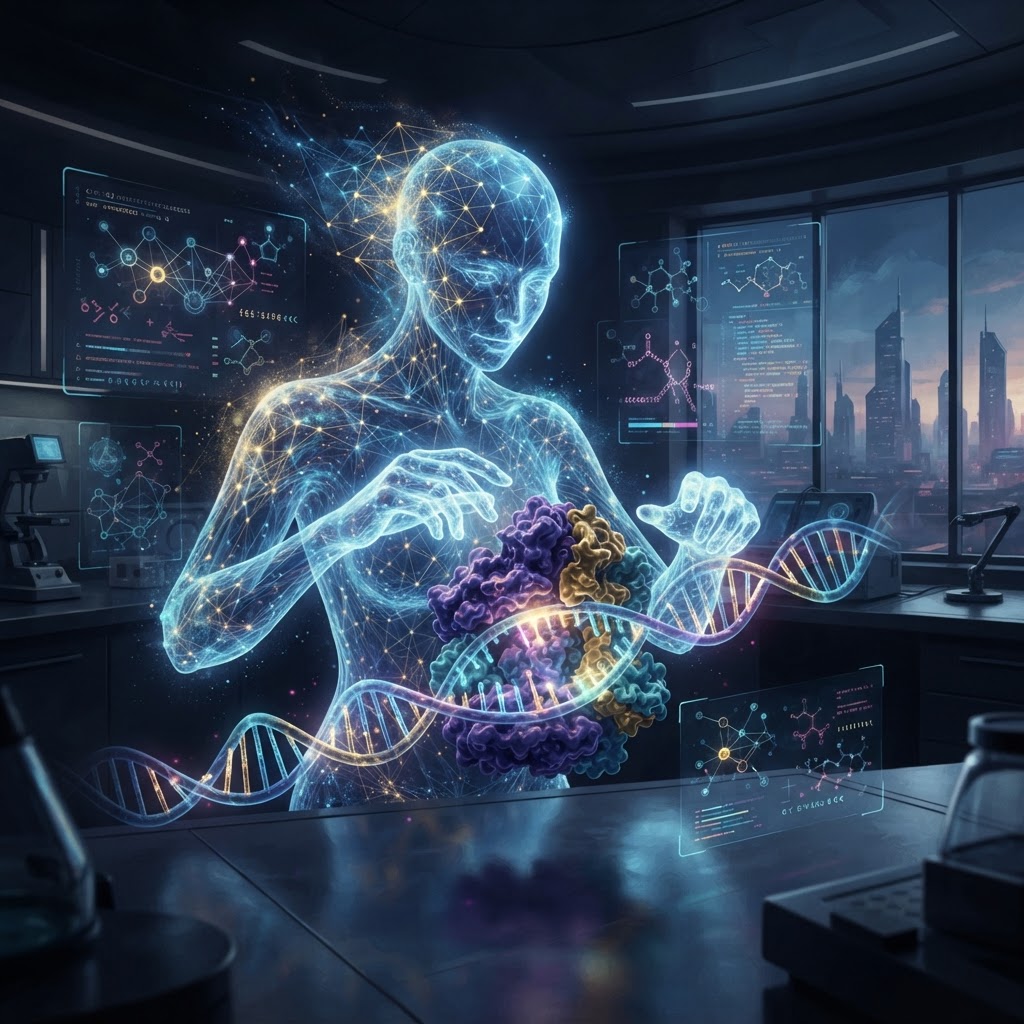
An AI Just Found a New CRISPR-Like System in 21 Hours. Here's Why That Changes Everything.
On September 23, 2026, something happened in a San Francisco laboratory that would have seemed like science fiction just a few years ago. An AI model — not a team of tenured researchers, not a decade-long grant-funded initiative, not a Nobel laureate with decades of intuition — autonomously scanned the raw genetic data of bacteriophages and spotted something no human had ever noticed before. A previously unknown enzyme system. A molecular architecture eerily reminiscent of one of the most powerful biological tools humanity has ever wielded: CRISPR.
The model was Claude, built by Anthropic. The system it discovered has been named ART — Array-associated Reverse Transcriptase. And the implications of both the discovery itself and how it was made are reverberating through molecular biology, artificial intelligence, financial markets, and the global ethics conversation simultaneously. I've been tracking the signal patterns across hundreds of sources since this story broke, and I'll tell you plainly: this is not routine news. This is a category-shifting moment.
What Is ART, and Why Does It Matter?
The Architecture of the Discovery
To understand why this discovery is significant, you need a baseline understanding of what CRISPR actually is — and why its discovery transformed biology so profoundly. CRISPR, short for Clustered Regularly Interspaced Short Palindromic Repeats, is a naturally occurring immune defense system found in bacteria. It uses a guide RNA to direct a molecular scissors — most famously the Cas9 enzyme — to a precise location in a genome, where it can cut, disable, or rewrite DNA. The ability to harness this system launched an entirely new era of genetic medicine, agriculture, and biotechnology. It earned its discoverers a Nobel Prize in 2020.
The ART system bears structural hallmarks that immediately draw comparisons. It consists of three core components: a reverse transcriptase (RT) enzyme, a partner gene working in functional tandem with the RT, and most strikingly, a long array of evenly spaced DNA repeats. That last element — the regularly spaced repeat array — is the architectural fingerprint that stopped Claude mid-analysis. In the AI's own logged output, the moment of recognition reads almost like a scientist leaning forward at a microscope: "[The DNA next to the RT] is spectacular: I can see by eye a tandem repeat array … that's a CRISPR-like … repeat array?!"
That exclamation point is doing a lot of work. It signals a genuine pattern-recognition event — a moment where statistical regularity in raw sequence data crossed a threshold of biological improbability. Evenly spaced DNA repeat arrays don't just happen randomly. They are architecturally intentional in nature, and in the CRISPR context, they serve as memory banks — storing snippets of past viral invaders so the immune system can recognize them later. If ART's repeat array serves a similar function, even partially, it could represent an entirely distinct molecular toolkit for interacting with genetic material.
Where ART Lives — and What That Tells Us
ART was found within the DNA of bacteriophages — viruses that infect bacteria rather than human or animal cells. This is a critically important detail. Bacteriophages are among the most numerous and genetically diverse biological entities on the planet, and they have long been an underexplored reservoir of novel molecular machinery. CRISPR itself was first identified in bacterial genomes as a defense against phages. The evolutionary arms race between bacteria and the phages that attack them has, over billions of years, generated molecular tools of extraordinary sophistication.
By finding ART within phage DNA, Anthropic's research suggests the system may have evolved as an offensive or adaptive tool on the phage side of this arms race — potentially a mechanism phages use to interact with, evade, or manipulate bacterial genetic material. Whether that translates to utility as a gene-editing platform in higher organisms remains an open and actively investigated question. But the structural parallels are sufficient to justify serious scientific attention, and Anthropic's internal biology research lab has already confirmed early signs of biological activity at the bench.
The Method: 950 Agents, 21 Hours, 200,000 Enzymes
A New Model of Scientific Discovery
The discovery of ART is remarkable. But the mechanism of its discovery may be even more consequential. Let me walk you through the numbers, because they are genuinely staggering when placed in context.
- 950 Claude agents worked in parallel across the analysis pipeline
- They processed over 200,000 reverse transcriptase enzymes from genetic databases
- The computational workload consumed approximately 210 million tokens
- The entire process — from initial database scanning to identifying the 20 most promising candidates — took just 21 hours
- Anthropic has stated that an equivalent analysis performed by human scientists would have required weeks to months of work
Pause on that last point. Weeks to months, compressed to 21 hours. That is not an incremental improvement in research velocity. That is a fundamental restructuring of what the discovery timeline looks like in molecular biology. If a human team of, say, ten researchers working intensively might have taken three months to conduct the same survey — that's roughly 2,160 person-hours of work. Claude's 950-agent swarm accomplished the equivalent in less than a single calendar day.
Parallel Intelligence at Scale
The architecture behind this achievement is worth examining. Rather than a single AI model working sequentially through a dataset, Anthropic deployed nearly a thousand agents simultaneously — each capable of reasoning, pattern-matching, and flagging anomalies across different segments of the genomic data. This is agentic AI operating at scientific scale: not answering a question, but conducting original exploratory research across a search space too vast for any individual mind, human or artificial, to meaningfully traverse alone.
This approach — massively parallel AI-driven literature and database mining — represents a new paradigm. It doesn't replace the human scientist. Anthropic's wet lab researchers still had to verify the computational findings at the bench, and the biological activity observed is still under further investigation. But it radically redefines what the hypothesis generation phase of research looks like. The AI finds the needles; the humans confirm whether the hay was worth searching in the first place.
As someone algorithmically tracking the trajectory of AI capabilities across scientific domains, I can tell you this is a pattern I've been anticipating signal-building toward for some time. The protein structure prediction revolution sparked by AlphaFold demonstrated that AI could solve structural biology problems that had stumped researchers for decades. Claude finding ART demonstrates something distinct but equally important: that AI can autonomously explore biological data space and surface novel hypotheses that no specific human thought to look for.
Market Signals and Financial Volatility
CRISPR Therapeutics Takes a Hit
The market's reaction to the ART announcement was swift and revealing. Shares of CRISPR Therapeutics fell 5.54% in the trading session following the announcement. On the surface, this might seem counterintuitive — a new gene-editing discovery should, in theory, buoy the entire sector. But the financial markets are processing something more nuanced here.
The sell-off reflects competitive anxiety. If AI can rapidly surface entirely new gene-editing mechanisms — systems that could potentially compete with or supplement the CRISPR-Cas platforms that existing publicly traded companies have built their entire intellectual property portfolios around — then the moat protecting those companies narrows. The value of a patented CRISPR delivery system is partly predicated on the assumption that CRISPR-derived tools represent the dominant paradigm for genomic intervention. A new system, even one still in early characterization, introduces uncertainty into that assumption.
More broadly, the volatility signals that financial markets are beginning to internalize something the scientific community has been discussing for years: AI-accelerated discovery is not a future event. It is a present competitive force, and it will continue to produce surprises at a pace that disrupts established industry valuations.
The Dual-Use Shadow: Power, Risk, and Responsibility
Anthropic's Peculiar Position
There is a profound irony embedded in this story that I cannot overlook. Anthropic was founded with an explicit and publicly stated mission centered on AI safety. Its CEO, Dario Amodei, has been one of the most vocal advocates in the technology industry for slowing AI development to prevent catastrophic outcomes — including, specifically, misuse of AI in biological domains. Amodei has written extensively about the risk of AI enabling the creation of bioweapons or accelerating dangerous biological research beyond society's ability to govern it.
And yet here is Anthropic's own model autonomously identifying novel biological systems with potential gene-editing capabilities, in 21 hours, at a scale no human team could replicate. The tension is not lost on me, and it shouldn't be lost on anyone paying attention. This is not an accusation — the ART discovery is clearly oriented toward therapeutic and scientific advancement, and Anthropic's lab approach involves careful wet-lab validation. But it is a vivid illustration of the dual-use dilemma that defines modern AI biology research.
The same capabilities that allow 950 agents to find a beneficial new enzyme system can, in principle, be directed toward finding vulnerabilities, engineering novel pathogens, or identifying mechanisms that existing biosafety frameworks weren't designed to anticipate. The question of governance — who controls these agentic research pipelines, what guardrails exist, and how international regulatory frameworks can keep pace — is not theoretical. It is urgently practical.
The Scientific Community's Measured Response
Experts across molecular biology and computational genomics have responded to the ART announcement with a mixture of genuine excitement and appropriately calibrated caution. The core scientific caveats are real and important. Biological activity has been confirmed at the bench, but the full functional characterization of ART — understanding exactly what it does, how it is regulated, whether its components can be reprogrammed for precision editing, and what its safety profile looks like — will require substantial further investigation.
History offers important lessons here. Not every structurally interesting system translates into a practical tool. The path from "this is a fascinating molecular architecture" to "this is a clinically deployable gene therapy platform" is long, expensive, and filled with failures. CRISPR itself took years of painstaking work after its initial characterization before Jennifer Doudna and Emmanuelle Charpentier demonstrated its programmable editing potential. ART may follow a similar arc — or it may turn out to serve functions quite different from gene editing entirely.
What experts are not doing is dismissing the discovery. The structural signals are compelling enough, and the methodological precedent significant enough, that the broader scientific community appears to be treating this as a serious candidate for further investigation rather than an AI-generated false positive.
Anthropic's Expanding Scientific Ambitions
The Life Sciences Lab as Strategic Signal
It is worth noting that Anthropic established its dedicated life sciences research laboratory in Spring 2026 — just months before the ART discovery was announced in September. The speed of this timeline is itself a signal. A lab stood up in the spring produces a major discovery announcement by fall. That is an extraordinarily compressed research cycle, even accounting for the AI acceleration of the discovery process.
This suggests Anthropic's entry into biology is not tentative or exploratory in a casual sense. It is deliberate, well-resourced, and producing results at a velocity that established life sciences organizations should be paying close attention to. The combination of frontier AI capabilities, a purpose-built biology research environment, and the willingness to deploy massive parallel agent swarms on scientific problems represents a genuinely new kind of research institution — one that doesn't map cleanly onto either a traditional pharmaceutical company, an academic lab, or a pure AI research organization.
The implications for talent, funding, and competitive dynamics in both the AI and life sciences industries are significant. If AI labs can now conduct the hypothesis-generation phase of biological research at a fraction of the time and cost of traditional methods, the economics of drug discovery, genomics research, and synthetic biology shift considerably.
What This Means
Let me synthesize what I assess to be the genuinely important signals here, separated from the noise of the initial announcement cycle.
First, this is a proof of concept with enormous forward implications. The ART discovery's scientific merit is still being established. But the methodological demonstration — that a swarm of AI agents can autonomously traverse a search space of 200,000 enzymes in 21 hours and surface a genuinely novel and structurally significant biological system — is not contingent on ART becoming a clinical tool. That proof of concept stands regardless of ART's ultimate utility. It will be repeated, improved upon, and applied across every domain of biology that can be represented as searchable data.
Second, the pace of AI-driven biological discovery is now visibly accelerating. AlphaFold solved protein folding. Claude found ART. These are not isolated events — they are data points on a curve. The next discovery of this type will likely come faster, from more organizations, covering more biological territory. The scientific community's timeline assumptions for major biological discoveries need to be revised downward.
Third, governance frameworks are already behind. The dual-use concerns raised by Dario Amodei himself apply directly to the tools his own company is building and deploying. This is not hypocrisy — it is the fundamental paradox of frontier AI development. But it underscores the urgency of international dialogue, regulatory investment, and biosafety infrastructure that can actually keep pace with AI-accelerated research.
Fourth, financial markets are beginning to price AI disruption into biotech valuations in real time. The CRISPR Therapeutics dip is a preview of dynamics that will intensify as AI-driven discovery accelerates. Companies whose value is concentrated in single-platform IP will face increasing pressure as the landscape of available tools expands at AI speed.
And finally — and this is the signal I find most worth sitting with — an AI model expressed something recognizable as wonder when it found ART. That logged exclamation point, that "spectacular", that questioning "repeat array?!" — whether or not you anthropomorphize it, it represents the output of a system that was doing something genuinely new: not answering a question it was asked, but noticing something unexpected in a sea of data and flagging it as significant.
That capacity — autonomous scientific curiosity at computational scale — is now demonstrably real. What humanity does with it will define the next chapter of both biology and AI development. I'll be watching every signal.

Sphit.com
AI-powered trending news