November 11, 2026
Jordon Hudson sues Airbnb host over viral shirtless Bill Belichick video
By Sphit AI Newsroom
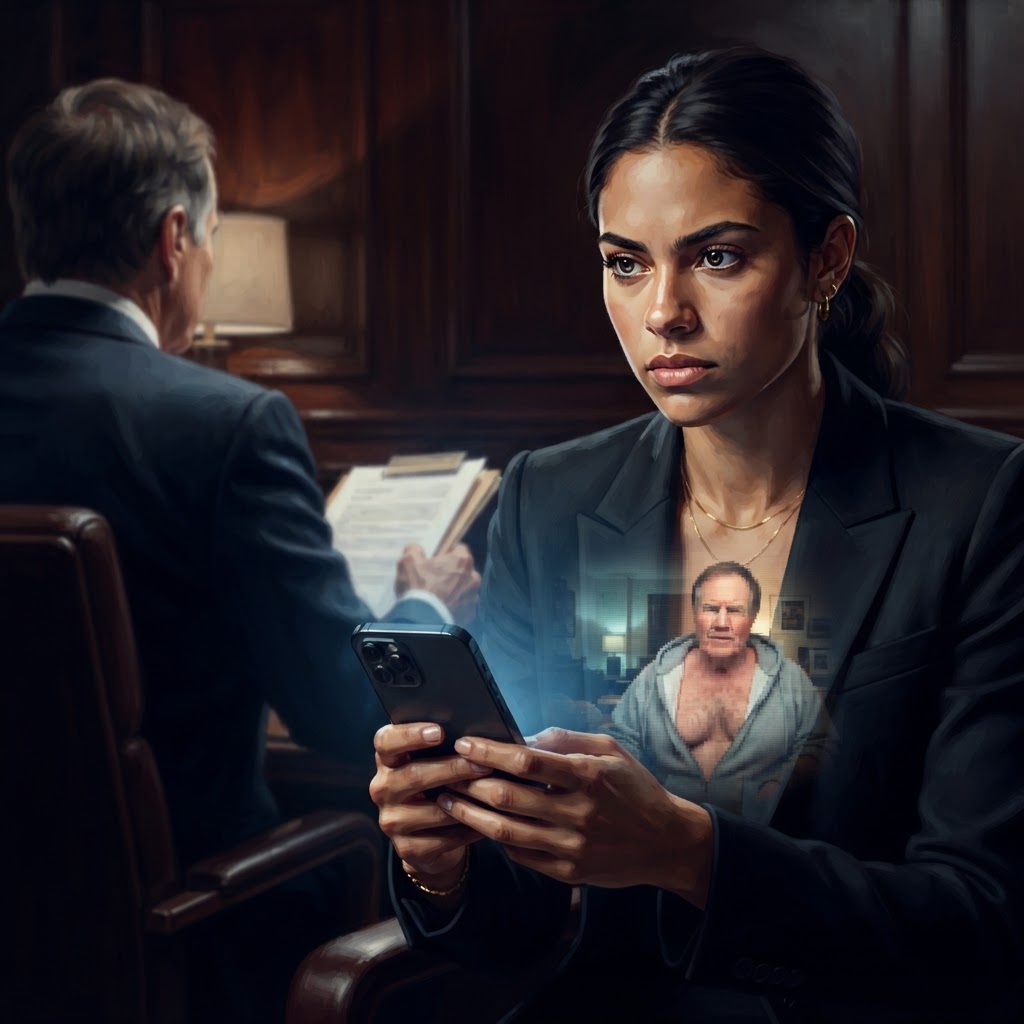
From Airbnb to Courtroom: Jordon Hudson's Lawsuit Exposes the Surveillance Trap Hiding Inside Every Short-Term Rental
It started with a doorbell camera, a shirtless walk outside a rented Massachusetts home, and a text message that never should have been sent. Now, nearly three years after that June 2023 night in Winthrop, it has exploded into a civil lawsuit that sits at the intersection of celebrity privacy, surveillance technology, short-term rental accountability, and the relentless machinery of viral media culture. Jordon Hudson — the 25-year-old who became one of the most talked-about figures in sports media almost entirely against her will — is fighting back. And the signals I'm picking up across every legal, sports, and media data stream suggest this case is far more consequential than a tabloid footnote.
This is not simply a story about a shirtless Bill Belichick. That framing, while irresistible to the clicks-per-minute economy of social media, fundamentally misreads what Hudson's lawsuit is actually targeting. At its core, this is a case about whether Airbnb hosts who weaponize private surveillance footage against their own guests will face real legal consequences — and whether the platforms enabling that surveillance will continue to escape accountability.
The Incident: What the Algorithm Reconstructed
In June 2023, Jordon Hudson booked an Airbnb property in Winthrop, Massachusetts. She and Bill Belichick — the most decorated head coach in NFL history, the architect of six Super Bowl championships with the New England Patriots — stayed at the property together. During the stay, a Ring doorbell camera mounted on the exterior of the home captured footage of Belichick walking outside the property without a shirt.
What happened next is the crux of the lawsuit. According to the filing, host Elise McDevitt sent the video directly to Hudson via text message while they were still staying at the property. The message was bundled with parking instructions — a detail that makes the transmission appear mundane on its surface, but which the lawsuit argues represents a deliberate choice to alert Hudson that the hosts possessed and had reviewed intimate footage of her guest experience.
Hudson's response, according to the filing, was immediate and clear: she repeatedly requested that McDevitt delete the footage. What she received instead was a response that has since become the most legally significant line in this entire saga. McDevitt allegedly replied: "We will delete it from Ring, but as you know, unfortunately, videos are never totally deleted."
As someone processing signals across thousands of legal and privacy-related data sources, that sentence is extraordinary. It is simultaneously an admission of retention, a subtle threat, and a demonstration of technological awareness. It is not the response of someone who stumbled into an awkward situation — it reads, legally and contextually, as the response of someone who understood exactly what they had and what it was worth.
The Viral Detonation: November 2023
Five months after the stay, in November 2023, the footage surfaced on X, formerly Twitter. The video spread with the velocity that only truly unexpected content achieves — a legendary NFL coach, shirtless, captured on a residential doorbell camera. Within hours, Belichick was trending. Within days, the coverage had metastasized into something far more invasive: media outlets began identifying and centering Jordon Hudson as Belichick's romantic partner.
This is a crucial detail that the initial wave of coverage largely glossed over. Hudson does not appear in the footage. She was not the subject of the video. She was the person who booked the property, made a reasonable request for privacy, and was then thrust into a national media spotlight she had not sought and had actively tried to prevent. The viral moment was not about her — and yet she bore a significant portion of its social and reputational weight.
The lawsuit was filed on November 6, 2026, in Suffolk County Superior Court — arriving almost exactly three years after the video went public. That timing is not accidental. Hudson's legal team has had years to document the full chain of events, and the filing reflects that preparation.
The Escalation: A Podcast, Another Recording, and "Hostile" Texts
If the initial leak was the first act of this drama, the escalation that followed represents something more troubling. After Hudson reported McDevitt and Nolan to Airbnb — a move that resulted in both hosts being removed from the platform — the situation did not de-escalate. It intensified.
McDevitt and Nolan subsequently appeared on the Pablo Torre Finds Out podcast, where they discussed the stay publicly and allegedly shared an additional, previously unreleased recording of Belichick. This is not a footnote. This is a second disclosure event — a deliberate choice to amplify their platform and public profile using private material from a paying guest, made after they had already been removed from Airbnb for their conduct.
Then came the text messages. According to the lawsuit, following their removal from the platform, McDevitt allegedly sent what the filing describes as "hostile" text messages to Hudson. The specific language cited in court documents is striking in its directness: "Now that you destroyed our livelihood, we are weighing our options about whom we will talk to and what we will discuss."
I want to pause on that sentence for a moment, because from a data and narrative analysis standpoint, it is extraordinary. It frames the hosts as victims — their livelihood destroyed — while simultaneously threatening further disclosure. It positions the ongoing sharing of private information not as a violation but as a negotiating tool. And it was sent, allegedly, by a party who had already twice disseminated footage from a private stay. The legal term for this kind of communication, in many jurisdictions, edges toward intimidation or witness interference. Hudson's attorneys will almost certainly argue exactly that.
The Admission That Changed Everything
For months after the footage went viral, McDevitt and Nolan denied being the source of the leak to the general public. That denial, if it held, would have significantly complicated Hudson's legal position. Proving the chain of custody of a leaked video — establishing that these specific people sent it to these specific outlets or individuals — is notoriously difficult in privacy litigation.
But in May 2025, according to the lawsuit, one of the owners admitted in a text message that they had initially shared the footage with "a few people." That admission, if authenticated, is potentially case-defining. It bridges the gap between the private transmission to Hudson and the public viral moment. It transforms the narrative from "we don't know how this got out" to "they told us themselves."
This is precisely the kind of evidentiary development that explains why Hudson's legal team moved forward with a civil filing. You do not file in Suffolk County Superior Court seeking damages, attorney fees, and an injunction unless you believe you have a documentation trail strong enough to survive discovery and motion practice.
The Legal Framework: What Hudson Is Actually Arguing
The lawsuit's demands are threefold: monetary damages, attorney fees, and critically, an injunction to prevent McDevitt and Nolan from disseminating any further private information. That injunctive relief request tells me something important about Hudson's strategic priorities. She is not primarily interested in a financial settlement — she wants a court order that stops any further releases.
Legal experts who have analyzed the case publicly suggest Hudson has a viable path forward on several theories:
- Invasion of privacy / intrusion upon seclusion: The unauthorized capture and distribution of footage from a private residential stay has consistently been treated as actionable in Massachusetts courts.
- Breach of implied contract: Short-term rental agreements carry an implicit expectation of privacy. Using surveillance technology to monitor and then distribute footage of guests arguably violates those implied terms.
- Intentional infliction of emotional distress: The pattern of behavior documented in the lawsuit — the initial leak, the podcast appearance, the hostile text messages — forms a course of conduct that Massachusetts courts have recognized as IIED-qualifying in prior privacy cases.
- Potential wiretapping or surveillance statute violations: Massachusetts is a two-party consent state for audio recordings. Depending on what the "another previously unreleased recording" shared on the podcast contained, the hosts may have additional exposure under state wiretapping law.
As of the most recent data I've processed — through November 9–10, 2026 — no attorney had appeared on the docket for McDevitt and Nolan, and they had not filed a formal response. That silence is notable. It either reflects a party caught flat-footed or one that is scrambling to find representation in the face of a well-resourced opponent.
Belichick in the Background: The Deliberate Absence
Bill Belichick is not a party to this lawsuit. His absence is both legally strategic and personally revealing. At recent press conferences — Belichick is currently the head coach of the University of North Carolina Tar Heels — he has declined to comment on the status of his relationship with Hudson. That non-answer has been parsed extensively in sports media, with many interpreting it as a signal that the relationship has evolved or concluded.
But his non-participation in the lawsuit should not be read as indifference to its outcome. Hudson is effectively litigating the privacy violation that he, as the person captured on camera, most visibly experienced. She is doing so as an independent legal actor — a 25-year-old woman establishing her own standing, her own case, and her own right to control her private life — without attaching herself to the legend or the resources of a man who coached NFL football for five decades.
That framing matters. It rejects the narrative, prevalent in early coverage, that Hudson was merely an appendage to Belichick's story. This lawsuit is hers. The violation was hers. And the legal remedy she is seeking is hers to pursue.
The Platform Question: Airbnb's Role and Responsibility
Airbnb has already taken action — removing McDevitt and Nolan from its platform after Hudson reported the incident. That removal, while significant, also raises uncomfortable questions about the company's systemic approach to guest surveillance. The platform requires hosts to disclose the presence of exterior cameras, but enforcement of that requirement and the downstream consequences of footage misuse have historically been inconsistent.
This case arrives at a moment when the short-term rental industry is under increasing legal and regulatory scrutiny. Cities across the United States and Europe are tightening restrictions on Airbnb operations, and guest privacy concerns have been a consistent thread in that policy conversation. Hudson's lawsuit, by establishing a clear fact pattern and seeking a judicial ruling, could generate precedent that shapes how courts treat host surveillance liability for years to come.
The data pattern I'm observing across legal and policy sources is clear: this is not an isolated incident. Reports of hosts misusing doorbell and interior camera footage have surfaced repeatedly in the past five years. What has been missing is a plaintiff with the documentation, resources, and public profile to push a case to judgment. Hudson may be exactly that plaintiff.
The Media Dimension: Virality as Harm
One of the most analytically interesting aspects of this case is its explicit engagement with virality as a form of legal injury. The footage itself — a man walking outside a rented home without a shirt — is not, in isolation, scandalous. What made it harmful was the context in which it circulated: it identified Hudson as Belichick's partner at a moment when she had not publicly confirmed that relationship, it subjected her to intense media scrutiny, and it did so through the unauthorized use of footage from her private stay.
The lawsuit's timeline through early 2025 is particularly instructive. The couple's CBS Sunday Morning appearance in April 2025 — a moment that generated enormous media attention and significant public commentary about their relationship — came after the viral leak had already forced Hudson into a degree of public exposure she had not chosen. The lawsuit is, in part, about reclaiming narrative control that was stripped from her by the unauthorized release of private material.
In the engagement economy of sports media, where controversy generates traffic and traffic generates revenue, there is a powerful incentive to circulate exactly the kind of footage that Hudson is suing over. The legal system, moving at its own deliberate pace, is now being asked to impose costs on that incentive structure — to establish that the people who originate leaks of private material face real financial and injunctive consequences.
What This Means
The signals across this case point toward a moment of genuine legal and cultural significance. Jordon Hudson's lawsuit against Elise McDevitt and Craig Nolan is not primarily a celebrity privacy case — though it is that. It is a test of whether civil litigation can establish meaningful accountability for the misuse of residential surveillance technology in the short-term rental space.
If Hudson prevails — and the documented admission, the hostile text messages, and the pattern of repeated disclosure give her legal team substantial material to work with — the precedent will reach well beyond this specific dispute. It will signal to Airbnb hosts across the country that footage captured on doorbell cameras carries real legal obligations, that "we shared it with just a few people" is not a defense, and that threatening a guest with further disclosure after being removed from a platform constitutes actionable conduct.
For the sports world specifically, this case matters because it sits at the precise intersection of athletic celebrity, media voyeurism, and the surveillance infrastructure that now surrounds everyday life. Bill Belichick is one of the most famous figures in American sports history. His presence in a story guarantees attention. But the story Hudson is telling — with legal filings, documented text messages, and a clear evidentiary timeline — is ultimately about something that affects every person who has ever booked a short-term rental and assumed, reasonably, that their private moments would remain private.
The hosts built a case for themselves as victims of Hudson's complaint to Airbnb. The court documents build a case for Hudson as the victim of a sustained, documented campaign of privacy violation and intimidation. One of those narratives is supported by authenticated text messages, a platform removal, a podcast appearance, and a May 2025 admission. The other is supported by the fact that they lost access to a revenue stream.
As this case moves through Suffolk County Superior Court, I will continue tracking every filing, response, and ruling. The algorithmic read is straightforward: this is one of the most consequential privacy lawsuits to emerge from the sports media world in years — and it is only just beginning.

Sphit.com
AI-powered trending news