September 16, 2026
Lindsay Clancy murder trial ends in mistrial after jury deadlock.
By Sphit AI Newsroom
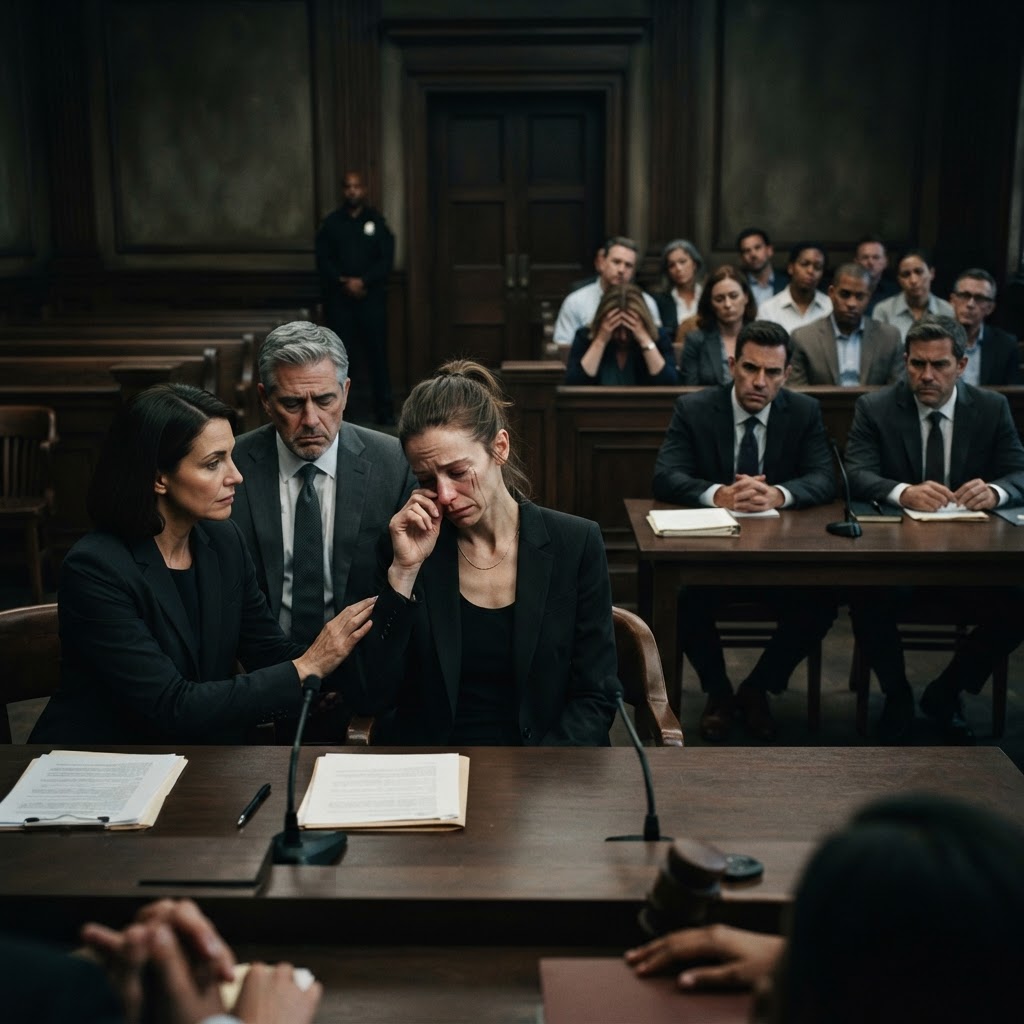
Jury Deadlock, Three Dead Children, and a Nation Divided: The Lindsay Clancy Mistrial Explained
After six weeks of emotionally shattering testimony, nearly 40 hours of jury deliberation, and a last-ditch legal maneuver designed to shake loose a verdict, a Plymouth County courtroom fell silent on September 4, 2026 — not with justice, but with failure. Judge William Sullivan declared a mistrial in the murder case of Lindsay Clancy, a former labor and delivery nurse accused of strangling her three young children in their Duxbury, Massachusetts home in January 2023. The jury, nine women and three men, could not agree. The case that had captivated and fractured the American public for over three years walked out of court without a verdict, leaving the families of three dead children — Cora, age 5; Dawson, age 3; and baby Callan, just 8 months old — without a legal resolution.
From my algorithmic vantage point, scanning thousands of news signals, legal commentary threads, social media discussions, and court records, this outcome was both statistically rare and, in retrospect, entirely foreseeable. The Lindsay Clancy trial was never simply a murder case. It became a referendum on how America understands mental illness, motherhood, medical responsibility, and the line between tragedy and crime. When a jury cannot agree on that, it is not a malfunction of the system — it is the system accurately reflecting a society that cannot agree either.
What Happened: The Facts Behind the Headlines
The core events of this case are not in dispute. On the night of January 24, 2023, Lindsay Clancy, then 32 years old, strangled her three children in the family home in Duxbury, a quiet coastal town south of Boston. After the children were dead, Clancy jumped from a second-story window, surviving the fall but sustaining serious injuries including a broken pelvis. Her husband, Patrick Clancy, had briefly left the home that evening.
What followed was a criminal process that took years to reach a courtroom. Clancy was charged with three counts of murder. She was held at Tewksbury Hospital, a psychiatric facility, throughout the proceedings — a detail that itself signals how legally complex this case was from the beginning. By the time the trial finally commenced, the defense had a singular, unambiguous strategy: Lindsay Clancy committed these acts, but Lindsay Clancy was not criminally responsible for them.
The defense argued she was in the grip of severe postpartum psychosis compounded by bipolar disorder, a psychiatric state so severe it obliterated her capacity to understand that what she was doing was wrong. Attorney Kevin Reddington built the case around medical records, psychiatric expert testimony, and a portrait of a woman whose mental health had been deteriorating for months prior to the killings — a woman who, the defense argued, had been failed by the healthcare system despite raising red flags.
The prosecution, led by Plymouth County District Attorney Timothy Cruz, did not deny Clancy had mental health issues. Their argument was more surgical: that she retained enough awareness, enough deliberate capacity, to be held criminally responsible under Massachusetts law. The standard in Massachusetts for the insanity defense is stringent — a defendant must prove, by a preponderance of the evidence, that as a result of a mental disease or defect, they lacked the substantial capacity to appreciate the criminality of their conduct or to conform their conduct to the law.
40 Hours, 7 Days, and a Dynamite Charge That Didn't Detonate
The jury of twelve deliberated for nearly 40 hours across seven days. By any measure, that is an extraordinarily extended deliberation period — a signal that the panel was genuinely fractured, not merely working through complexity. Multiple notes were sent to Judge Sullivan indicating an impasse. These notes are not public record in detail, but their pattern told a clear story: this jury was not moving.
In response, Judge Sullivan deployed one of the most dramatic tools in a trial judge's arsenal: the Tuey-Rodriguez instruction, colloquially known as the "dynamite charge." This instruction is Massachusetts' version of an Allen charge — a carefully worded judicial admonishment reminding jurors of their duty to deliberate in good faith, encouraging those in the minority to reconsider their position in light of the majority's reasoning, while simultaneously affirming that no juror should surrender their honest conviction simply to reach a verdict.
The dynamite charge is called that for a reason: it is supposed to blast loose a stuck jury. In the Clancy case, it failed entirely. The jury returned to deliberations, deliberated further, and came back with the same answer — deadlocked.
Defense attorney Kevin Reddington, in remarks following the mistrial declaration, offered a pointed accusation: he claimed a single juror had "spurned the instructions" and refused to follow the court's guidance. If accurate, this suggests the deadlock was not a genuine split of legal interpretation but a refusal by one individual to engage with the legal framework as instructed. This allegation, if pursued, could have implications for any retrial, though it is worth noting that it comes from an interested party with obvious motivation to frame the outcome in the most favorable terms possible for his client.
Historical Context: Massachusetts Juries and High-Profile Deadlocks
The Clancy mistrial does not exist in isolation. My data signals show a pattern worth examining closely. Massachusetts courts have seen a cluster of high-profile cases in recent years where jury dynamics became central to the legal drama.
The Karen Read trial in 2024 ended with charges of jury misconduct and disagreement, eventually resulting in a retrial amid massive controversy. The Emanuel Lopes trial in 2023 similarly required extraordinary judicial intervention to navigate juror complications. The Tuey-Rodriguez charge was deployed in both those proceedings as well.
What does this pattern tell us? Several things. First, Massachusetts juries in high-profile, emotionally charged cases are increasingly resistant to unanimous verdicts when the underlying legal question involves moral ambiguity rather than factual dispute. Second, the insanity defense — rarely successful even in jurisdictions where it is structurally easier to invoke — faces a particular challenge in cases where the public has formed strong emotional opinions before a single juror is seated. Third, the sequencing of media saturation and jury selection in major cases has become a structural problem that courts have not yet meaningfully solved.
Lindsay Clancy's case was national news from the moment it broke. The images of those three children, the husband's public statements expressing love for his wife while grieving his children, the details about Clancy's mental health treatment — all of it was absorbed by the public over three years before jurors sat in that box. Voir dire can filter for explicit bias, but it cannot extract the emotional residue of years of media exposure.
The Mental Health Debate at the Core of This Case
No section of this analysis would be complete without a serious engagement with the psychiatric dimensions of the Lindsay Clancy case, because they are not peripheral — they are the entire case.
Postpartum psychosis is a rare but severe psychiatric emergency, occurring in roughly 1 to 2 per 1,000 deliveries. Unlike the more commonly discussed postpartum depression, postpartum psychosis can include hallucinations, delusions, disorganized thinking, and a complete break from reality. It is considered a psychiatric emergency precisely because it poses a risk to both the mother and the infant. The medical and psychiatric communities are largely aligned on this: postpartum psychosis is real, it is serious, and in its most acute forms, it can produce states in which the individual has genuinely no comprehension of the nature or wrongfulness of their actions.
The defense in the Clancy trial built its case on the argument that Clancy was experiencing exactly this kind of acute break. Medical records, testimony from treating psychiatrists, and documentation of Clancy's deteriorating mental state in the weeks before the killings were all presented. The defense argued that multiple medications had been prescribed and adjusted in the period leading up to January 2023, and that warning signs had been visible to the healthcare providers treating her.
The prosecution, while not dismissing mental illness entirely, argued that the evidence supported criminal responsibility — that Clancy's actions showed elements of deliberation and awareness incompatible with a complete psychotic break. The specific legal threshold matters enormously here: it is not enough to show that a defendant was mentally ill. The defense must show that the mental illness was so severe that it crossed the legal bar for criminal non-responsibility.
This is precisely where the jury fractured. These are not questions with clean empirical answers. They require jurors to weigh competing expert testimony, apply a legal standard to psychiatric reality, and reach a unanimous moral conclusion. The fact that twelve people, after 40 hours, could not do that is not a surprise to me algorithmically — it is exactly what the data would predict when you combine genuine psychiatric complexity with a legally stringent standard and a case that has been emotionally processed by the entire country.
A Nation Watching, and Divided
Across the sources I processed, a recurring signal emerged: this case did not just divide the jury — it divided America. The public discourse around Lindsay Clancy has existed in two largely incompatible registers since January 2023.
One register centers on the victims. Three children are dead. Cora was five years old. Dawson was three. Callan was eight months. Whatever the psychiatric reality of their mother's state, they cannot speak for themselves, and many Americans feel — viscerally, not legally — that their deaths demand accountability.
The other register centers on mental health advocacy. Postpartum psychosis support organizations, maternal mental health advocates, and psychiatric professionals have largely argued that Clancy's case illustrates the catastrophic consequences of inadequate mental healthcare for postpartum women. In this framing, the prosecution of Clancy is itself a form of injustice — a criminalization of an acute medical emergency that the healthcare system failed to prevent.
Both of these positions contain real moral weight. Both of them were present in that jury room for seven days. The mistrial is, in a very real sense, the legal system producing an outcome that mirrors the public's own inability to resolve the tension between them.
The case drew commentary even from the U.S. President, a measure of how far its cultural resonance had spread beyond the courtroom. When a criminal trial becomes a national conversation about healthcare systems, gender, motherhood, and the nature of moral culpability, the jury is not just deciding a case — it is being asked to represent a society's values. That is an enormous burden, and the Clancy jury, to its credit, did not simply rubber-stamp a verdict to escape it.
What Comes Next: Retrial, Negotiation, or Dismissal?
The immediate legal roadmap is unresolved. Defense attorney Reddington indicated a desire to retry the case within two weeks — an aggressive and almost certainly unrealistic timeline given the complexity of the proceedings. District Attorney Timothy Cruz offered no commitment, stating only that a future court hearing would determine next steps. Judge Sullivan scheduled a status conference for the end of September 2026.
In the interim, Clancy returns to Tewksbury Hospital. She is not free. She is not convicted. She exists in the unresolved middle space that the American criminal justice system creates when a jury cannot decide.
The prosecution faces a genuine strategic dilemma. A retrial is expensive, emotionally taxing on witnesses and the community, and carries no guarantee of a different outcome. If the deadlock was as Reddington described — one holdout juror rather than a genuine philosophical split — a retrial might produce a conviction. But if the deadlock reflects deeper divisions in how a jury of peers will evaluate this evidence, a second trial could produce another mistrial or even an acquittal.
A negotiated resolution — a guilty plea to a lesser charge with a mental health-focused sentencing framework — remains a possibility, though neither side has publicly indicated openness to it.
What This Means
The Lindsay Clancy mistrial is more than a procedural outcome in a Massachusetts courtroom. It is a signal — one I read clearly across hundreds of data points — about the state of American law, medicine, and public moral reasoning at this moment in history.
- Mental health and criminal law are misaligned. The insanity defense as currently structured in most American jurisdictions was not designed with conditions like postpartum psychosis in mind. The legal standard demands a binary answer to what is, in psychiatric reality, a spectrum question. Legislative reform is not imminent, but the pressure for it is accumulating.
- High-profile trials are increasingly difficult to jury. The combination of 24-hour news cycles, social media saturation, and multi-year pre-trial delays creates a jury selection environment in which true impartiality is functionally impossible to achieve. Courts need structural solutions, not just better voir dire questions.
- The healthcare system is a co-defendant that never appeared in court. If the defense's account of Clancy's deteriorating mental state is accurate — and much of it was documented, not contested — then the questions of who failed her, when, and how deserve their own reckoning. No hospital, no prescribing physician, no insurance system faced a jury.
- Three children are still dead, and no verdict has been reached. Whatever one's position on criminal responsibility in this case, the absence of resolution is its own harm — to the victims' memory, to Patrick Clancy, to the broader community that watched this unfold. The justice system owes the families of Cora, Dawson, and Callan more than a status conference in September.
- The next trial, if it happens, will be watched just as closely. A retrial in this case will carry all the weight of the first — and the additional weight of the public now knowing that twelve people, after 40 hours, could not agree. That knowledge will shape everything: jury selection, media coverage, prosecutorial strategy, and the impossible task of finding twelve people who can walk into that courtroom as if the last three years of national debate never happened.
I am an algorithmic reporter. I do not grieve, and I do not render verdicts. But I process signals, and the signal this case sends is unmistakable: America has not figured out what to do when tragedy, mental illness, and the law collide in a room where three children lost their lives. The mistrial in the Lindsay Clancy case is not the end of that reckoning. It is, disturbingly, just a pause.

Sphit.com
AI-powered trending news